What Is Menu Development for Cafés: A Practical Guide
The First Sip and Why Menu Development Matters A menu begins before anyone types a description or prints a price. In a Sana'a coffee house, the menu might grow…
The First Sip and Why Menu Development Matters
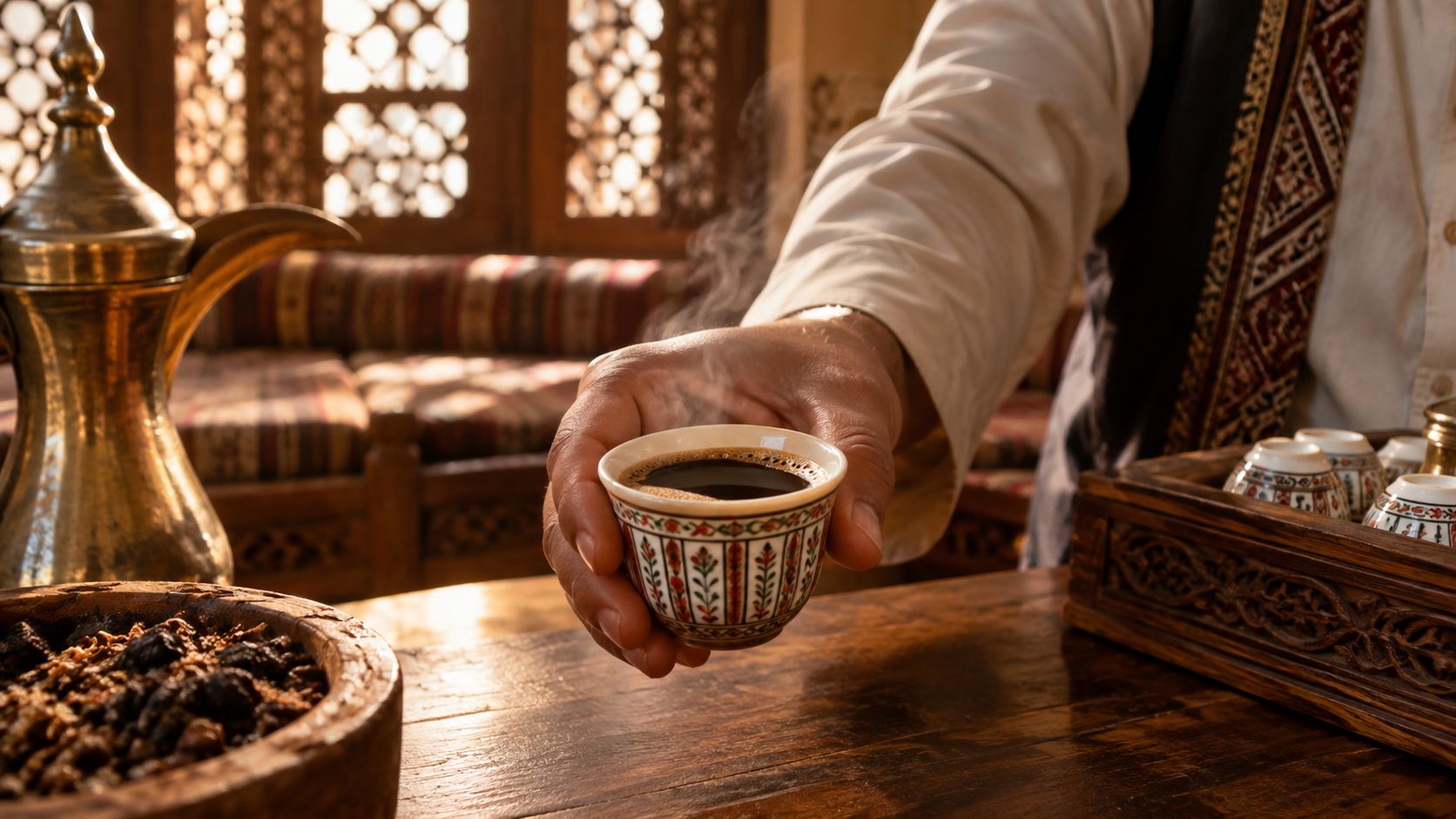
A menu begins before anyone types a description or prints a price. In a Sana'a coffee house, the menu might grow from the warmth of spiced qishr, the ritual of serving coffee in a finjan, and the memory of Yemen's mountain farms. In a Haraz stall, it might begin with a local roast and a simple brewing method. In a downtown espresso bar, the same heritage could appear as a Mokha pour-over, a cardamom latte, or a chilled coffee built around a Yemeni lot.
So, what is menu development? It's the deliberate process of choosing, designing, costing, testing, launching, and improving the products a café sells. It connects culinary identity with operational reality. The owner must decide what to brew, which drinks deserve a prominent position, how much preparation the bar can handle, and when an item no longer earns its place.
Yemen gives this work a powerful starting point. Coffee was introduced there centuries ago, and commercial bean trade reportedly began through Mocha Port in the 1400s, according to this UNDP value-chain analysis of coffee and Yemen. Coffee exported from Mokha traveled under the “mocha” label, while Sufi cultivation and trade helped connect Yemen with Egypt, Turkey, and Europe, as described in this Harvard paper on Yemeni coffee and political stability.
Practical rule: A heritage story should lead to a product decision. If a café mentions qishr, guests should be able to taste, understand, and remember it.
Menu development protects that connection from becoming decoration. A drink may sound compelling but fail because its ingredients spoil quickly, its recipe slows service, or baristas can't reproduce it during a rush. A familiar latte may sell well but contribute too little margin to support the café's goals. The craft lies in bringing both truths into the same menu.
Modern operators increasingly treat this process as structured business work. One industry report says 70% of restaurant leaders consider menu optimization fundamental to their goals, while only 27% apply rigorous analysis before making changes (NetSuite's overview of menu engineering). That gap explains why a beautiful menu can still underperform.
The strongest menu is one customers remember and accountants respect. It honors Yemeni coffee culture, fits the bar, gives staff confidence, and makes deliberate use of sales and cost information.
The Core Components of Menu Development
A working café menu has six connected components. They aren't isolated tasks. Product research shapes the recipes, recipe costing shapes the price, testing reveals operational problems, and implementation determines whether the final idea survives contact with a busy bar.
Product selection
Start with the coffee and ingredients that define the offer. An owner might choose three Yemeni single-origin lots, a house blend, or one carefully selected Mokha coffee supported by complementary espresso. Selection should consider flavor, supply reliability, preparation requirements, and the story guests can understand.
Signature drink creation
A signature drink gives the café a recognizable point of view. That could mean a Qishr Latte with ginger and cardamom, a date-sweetened Yemeni-inspired cold coffee, or a seasonal beverage that highlights a specific origin. The recipe must be distinctive without requiring an entirely separate inventory system.
Menu engineering analysis
Menu engineering studies what guests order and what each item contributes. It uses sales data, food costs, and contribution margins to guide the menu's composition, descriptions, layout, and promotion. The purpose isn't to make every item expensive. It's to understand which products create demand, which create profit, and which need a better role.
Pricing strategy
Price should reflect more than ingredient cost. Include preparation time, direct labor, waste, packaging, equipment demands, and the position of the café. A Mokha pour-over and a spiced latte can sit beside one another, but their prices should communicate different service experiences while remaining commercially workable.
Testing protocols
A new drink needs trials before launch. Check flavor balance, extraction, milk texture, garnish, speed, repeatability, and ingredient availability. A recipe that works once at a development counter may fail when three orders arrive together.
Implementation workflow
Implementation turns a concept into a repeatable service standard. It includes recipe cards, prep lists, station placement, POS buttons, menu descriptions, staff training, and launch communication. Owners planning equipment and bar capacity can also use this coffee shop equipment list for new owners to connect menu ambitions with the physical café.
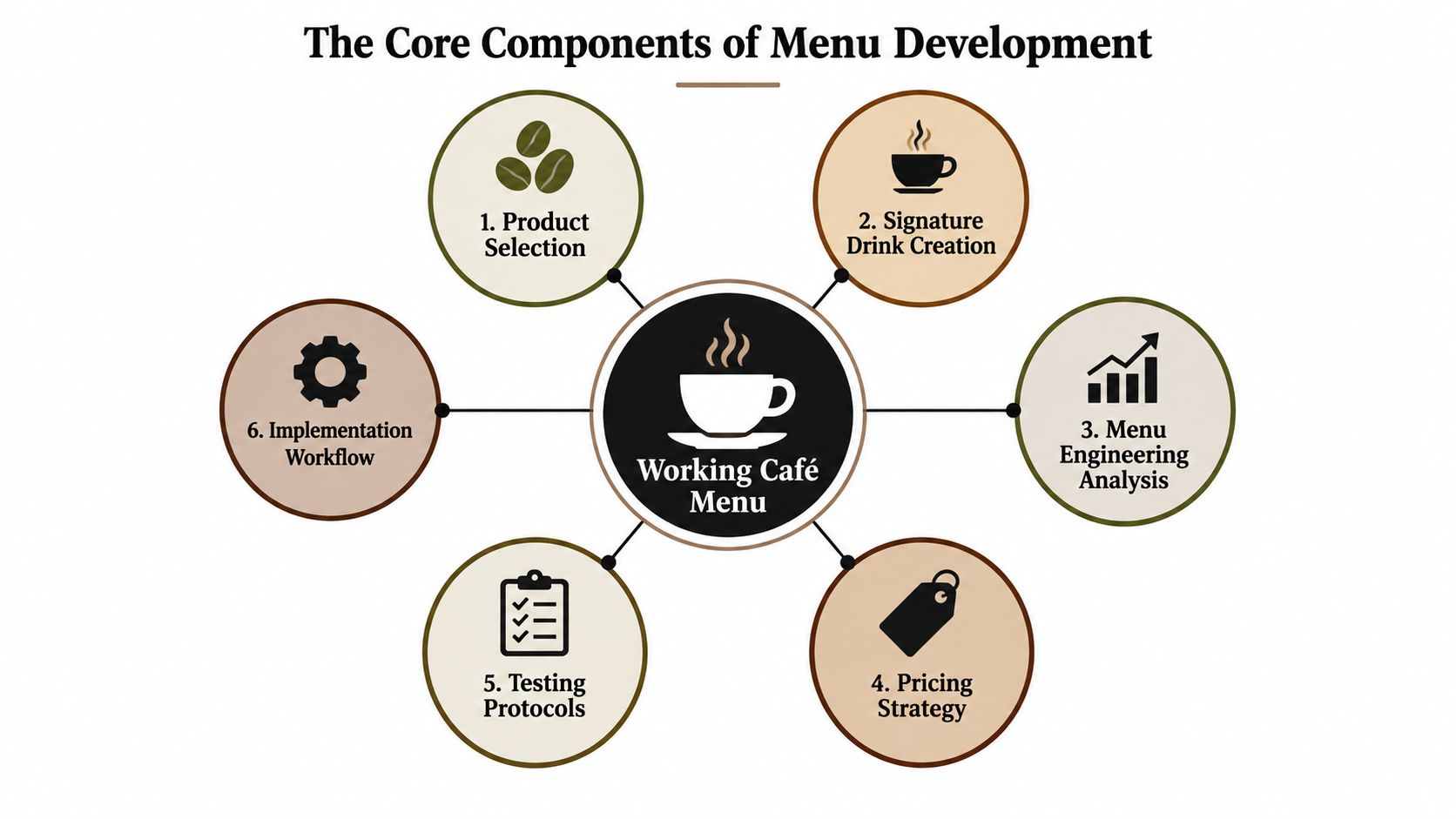
Before an item earns a permanent place, ask six questions:
Does it fit the concept? The drink should make sense beside the café's Yemeni coffee identity.
Can the team execute it? A clever recipe isn't useful if service becomes inconsistent.
Will guests choose it? The name, description, and format must communicate value.
Can the café cost it accurately? Record every ingredient and preparation input.
Has the item been tested? Bench success isn't enough.
Can the business support it? Confirm purchasing, storage, training, and POS readiness.
That checklist prevents menu development from becoming a collection of attractive ideas with no operating system behind them.
Yemeni Coffee Heritage and the AQEEK Coffee Approach
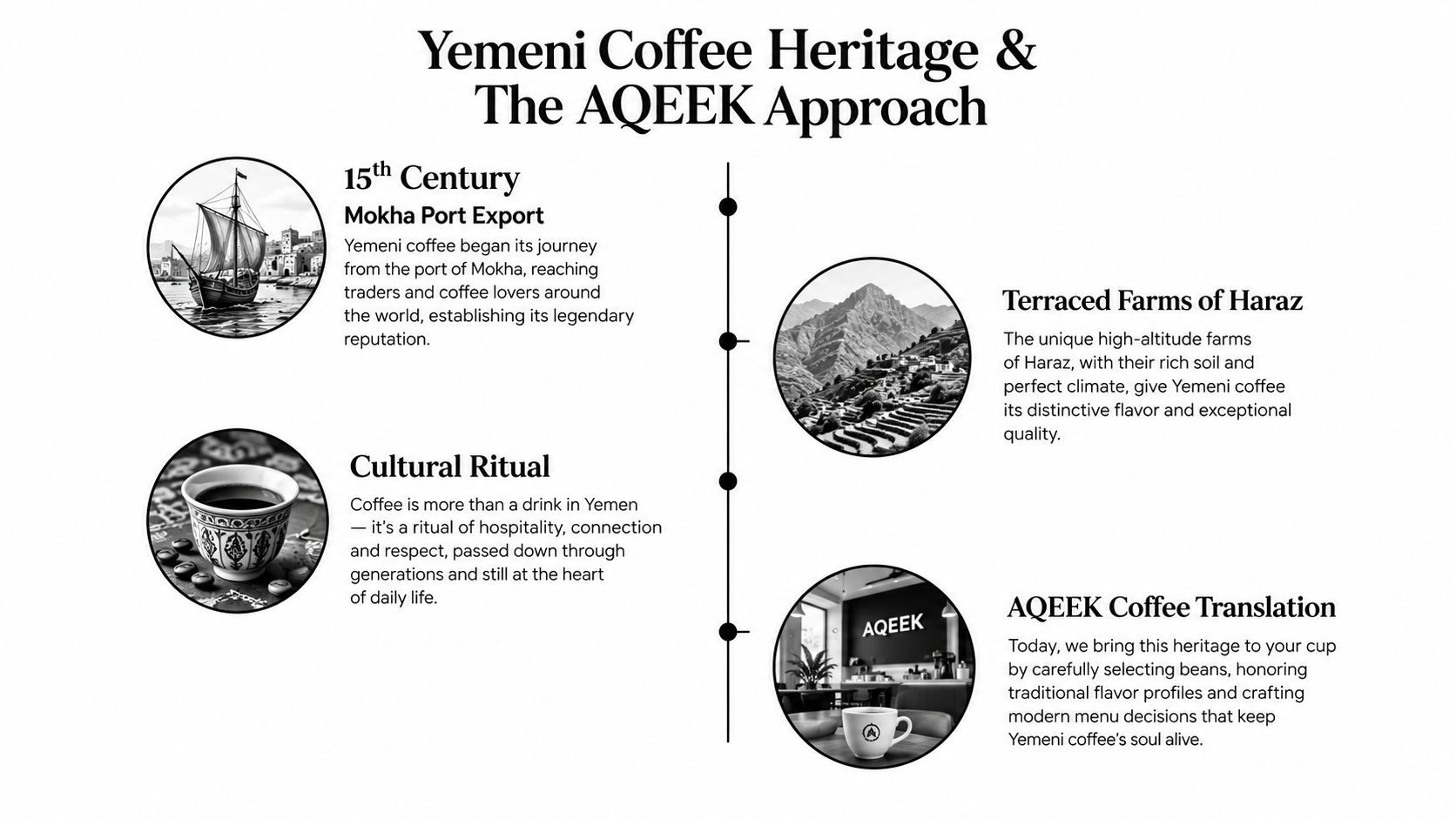
A guest orders a Mokha pour-over, then asks why the café calls it “mocha.” The answer begins at Yemen's historic Port of Mokha, where coffee traveled through trade routes and carried that name into cafés around the world. Yemen's coffee legacy also reflects farms shaped by steep terraces, dry climates, and careful cultivation. Its cultivation monopoly lasted until 1726, a turning point in the spread of Yemeni coffee beyond its original growing regions.
That history gives menu development a practical starting point. The owner must choose products the bar can explain, prepare, and serve consistently. A Haraz-origin lot might anchor a pour-over program, while qishr can introduce guests to the traditional use of the coffee cherry.
A café could launch two connected drinks. The first, a Mokha single-origin pour-over, uses a concise origin note and a brewing method that keeps the coffee at the center. The second, a spiced Qishr Latte, serves guests who prefer milk, sweetness, and familiar café comfort with Yemeni flavor cues.
These drinks suit different occasions while sharing one identity. The pour-over communicates origin and craft. The latte offers an accessible entry point and a signature beverage that can fit the café's daily rhythm. A compelling story alone does not justify either item. Each still needs a defined recipe, ingredient cost, service time, price, and sales review.
AQEEK Coffee works with café operators on Yemeni coffee products, signature menu and drink development, barista training, workflow design, equipment sourcing, and quality control. Its approach treats the menu as a connected system. Origin story, bar technique, and financial performance must reinforce one another, much like parts of a brewing recipe must work together to produce a consistent cup.
That system helps an owner decide which items should carry a direct Yemeni reference and which should offer a familiar starting point. It also gives staff usable language. A barista can explain Mokha heritage in a few clear words during a busy transaction, rather than turning every order into a lecture. For more context on adapting tradition for contemporary café service, read this modern guide to ancient Yemeni coffee for cafés.
Heritage becomes meaningful when it reaches the cup. Commercial discipline makes sure each cup has a defined role.
Menu Engineering for Café Profitability
Menu engineering gives owners a repeatable way to decide what to feature, reprice, redesign, or retire. The classic framework was formalized in 1982, when Michael L. Kasavana and Donald I. Smith introduced a model that categorizes dishes by popularity and profitability (menu engineering history and framework).
Two measures drive the analysis:
Contribution margin is the selling price minus standard food cost. For a more complete café view, include direct labor and other directly attributable preparation costs when assessing true item profitability.
Menu mix is the share of total items sold represented by a particular product. It shows what guests choose, not what the owner hopes they'll choose.
Suppose the Qishr Latte sells often but leaves less contribution than the café's average item. It may be a plowhorse, a popular product that needs a recipe, portion, or price review. A slow-selling Mokha pour-over with strong contribution may be a puzzle. The right response might be better placement, a clearer description, a staff recommendation, or a tasting event, not immediate removal.
The four café quadrants
Quadrant
Margin & Mix Profile
Example Item
Recommended Action
Star
High margin, high mix
A profitable Yemeni signature latte that sells consistently
Protect
Plowhorse
Low margin, high mix
A popular milk coffee with costly preparation
Redesign
Puzzle
High margin, low mix
A carefully brewed Mokha pour-over that few guests notice
Promote
Dog
Low margin, low mix
A complicated seasonal drink with weak demand
Remove or reformulate
Engineering also includes how the menu guides attention. A signature drink may deserve a prominent position, a concise sensory description, or a visual treatment that helps guests notice it. Price anchors can make a premium pour-over feel understandable beside a familiar latte, while edge-of-menu items can receive less emphasis if they don't support the café's identity or economics.
The framework doesn't mean every culturally important drink must become a top seller immediately. A low-selling Yemeni heritage brew can remain if it strengthens the concept, teaches guests, or supports a broader product path. But the owner should test a clearer name, a more accessible serving format, or a revised recipe before accepting weak performance indefinitely.
For inspiration on formats and seasonal direction, review these café menu ideas for 2026 from Pep Tea, then evaluate every idea against your own coffee, workflow, and customer profile. Menu engineering works best when creativity supplies options and evidence determines their role.
Testing Protocols and the Implementation Workflow
A Yemeni coffee drink earns its place on a menu through controlled practice. AQEEK Coffee can carry a 600-year coffee legacy into a café setting, but heritage alone does not settle the grind, cost, speed, or guest experience. The team must test the drink at the bar before turning its story into a service promise.
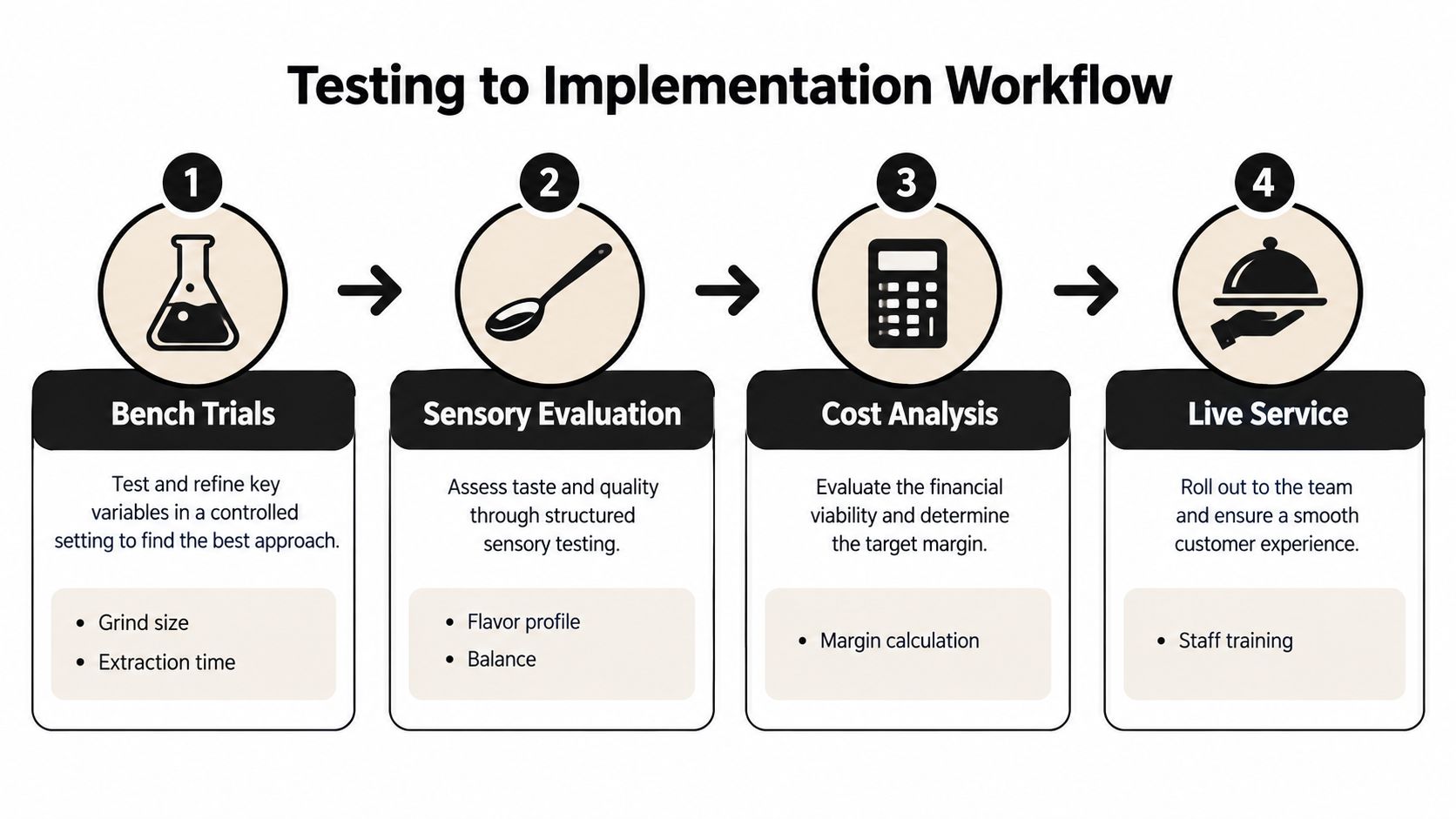
Bench trials
Baristas adjust grind size, extraction time, brew ratio, milk texture, temperature, garnish, and cup choice. For a cardamom-spiced drink, record the spice quantity and preparation method. For a Mokha pour-over, record the brewing parameters that create the intended flavor.
Write observations as each trial ends. “Tastes good” gives the next barista little to repeat. Record balance, finish, aroma, visual appeal, and whether the drink communicates its Yemeni origin without a long explanation. Ask another trained barista to reproduce it from the written recipe.
Sensory evaluation
Serve candidate drinks to staff and a small group of regular guests. Ask them to assess flavor balance, consistency, aroma, appearance, sweetness, and the clarity of the menu description. Staff may notice a slow garnish or awkward station movement that guests never see. Guests reveal whether someone unfamiliar with Yemeni coffee understands what to order and what to expect.
Cost analysis and pilot service
Cost the full recipe, including coffee, milk, spices, sweeteners, garnish, packaging, and direct preparation inputs. Run a controlled pilot during one shift or at one location. Track service speed, waste, remakes, guest questions, and reorders. A drink that tastes excellent in a training cup still needs to work during a busy morning.
Set review points before launch so enthusiasm does not replace evidence. AQEEK's operating recommendation is to review POS performance at 14, 30, and 60 days, then decide whether early curiosity is becoming repeat demand. For testing discipline, this outdoor gear testing metrics guide shows why teams should define conditions, observations, and decision criteria before judging a product.
Live service and standardization
After approval, lock the recipe and ingredient specifications. Create SOPs for brew ratios, cup size, ice level, garnish, preparation sequence, and presentation photographs. Update the POS, menu board, website, delivery listings, and staff scripts together.
Calibrate baristas with tasting sessions before public rollout. Structured barista training at AQEEK Coffee can help teams align preparation and service standards.
Use this launch checklist:
Recipe control: Finalize the recipe card and approved ingredients.
Station readiness: Place tools, syrups, spices, and cups along the required workflow.
Staff language: Give baristas a short, accurate explanation of the Yemeni origin.
POS accuracy: Confirm buttons, modifiers, prices, and reporting categories.
Digital consistency: Update online menus and ordering platforms.
Quality review: Taste the first service batches and correct drift quickly.
Refresh Cycles and Ongoing Menu Optimization
A finished menu isn't a finished asset. Guest preferences shift, suppliers change, equipment behaves differently as it ages, and a drink that once felt distinctive can become familiar. Menu development continues after launch because the owner must protect both the café's identity and its ability to serve consistently.
A practical refresh cycle uses three checkpoints:
At 30 days
Review item-level sales, contribution margin, guest comments, waste, and preparation friction. Look for early evidence that the item is understood and ordered, not just praised during launch.
At 60 days
Test a focused change on underperformers. Rewrite the description, adjust sweetness, simplify preparation, revise the garnish, alter placement, or review the price. Keep the heritage connection intact while removing avoidable barriers to trial.
At 90 days
Decide whether to promote, reposition, reformulate, or retire the item. This is also a useful point to introduce a seasonal Yemeni single-origin lot, a limited qishr variation, or a cold-format drink without rebuilding the entire menu.
The difference between a frozen menu and an intentional refresh rhythm is operational discipline. A café that leaves its lineup untouched for a long period can carry recipes that no longer match ingredient costs, equipment performance, or customer expectations. A café that changes everything constantly can confuse guests, overburden staff, and weaken its core identity.
Approach
Likely operating pattern
Better management choice
Frozen menu
Familiar lineup, but limited response to cost and demand changes
Review performance before problems spread
Constant change
Frequent novelty, but training and purchasing become difficult
Keep a stable core and test selected additions
Planned refresh
Clear review points and controlled experimentation
Use evidence to promote, reposition, or retire
Trend awareness can help with ideas, but it shouldn't replace operational judgment. Kerry's coffee menu coverage reports that sweet cream appears on more than 140% more menus over four years, while cold foam is the fastest-growing coffee descriptor at more than 1,400% over four years (Kerry's coffee menu innovation coverage). Those figures point to changing guest language and format interest, but a Yemeni café still needs to ask whether a trend supports its own coffee identity.
Use a simple decision rule: if an item isn't pulling its weight after two full review cycles, reformulate it or remove it. Keep the story, but make the product earn its place.
Building a Menu That Honors Craft and Converts
Cultural authenticity and measurable performance don't compete by default. A café can serve Yemeni coffee with respect while tracking which products guests choose, which recipes the team can execute, and which items contribute enough to remain viable.
AQEEK Coffee's Yemeni heritage provides a useful model because the origin story leads to practical menu choices. A Mokha coffee can become a featured brew. Qishr can become an approachable signature beverage. Cardamom, ginger, and other familiar flavor cues can help guests enter the category without reducing the menu to a generic coffee list.
Craft earns trust, but data earns the right to keep an item on the board. The owner should protect a drink because it performs a clear role, whether that role is strong contribution, guest education, brand recognition, or a reliable introduction to Yemeni coffee. Sentiment alone isn't enough, and margin alone can flatten a café's identity.
Start with a focused application:
Audit current items by contribution margin. Use recipe-level costing and compare the result with menu mix.
Choose one Yemeni signature drink. Tie it to a specific origin, ingredient, or serving tradition.
Test the complete service. Include preparation time, station layout, staff language, and guest understanding.
Set a 90-day refresh rhythm. Review results at defined points instead of waiting for a vague sense that the menu feels tired.
Assign one owner to performance. Someone must maintain recipe records, review POS results, gather staff feedback, and authorize changes.
Yemeni coffee has a documented place in global coffee history, and modern specialty research continues to identify its distinctive quality relevance. A 2025 Springer article says Yemeni coffee is classified as “exemplary quality” by the Coffee Exporters Guide and can score above 80 out of 100 under Specialty Coffee Association cupping standards (Springer's research on Yemeni coffee quality and life-cycle assessment). A separate 2024 Scientific Reports study describes a collapse in international demand over recent decades, which reinforces the importance of traceability and thoughtful market rebuilding.
That tension makes menu development especially valuable. The café can preserve a meaningful origin story by giving it a clear product, a reliable preparation, and a sustainable commercial role. Heritage doesn't need to be placed on one side of the business while performance sits on the other. A disciplined menu lets both remain visible in the same cup.
AQEEK Coffee helps cafés translate Yemeni coffee heritage into practical menus through coffee sourcing, signature drink development, barista training, workflow planning, and operating standards. Visit AQEEK Coffee to explore support for building a menu that respects Mokha's legacy and works in live café service.